- May 8, 2025
The Future of HR: Where AI is Making the Biggest Impact
- Trent Cotton
- AI in HR, Pillar Content
- 0 comments
The integration of Artificial Intelligence (AI) into Human Resources (HR) is no longer a futuristic concept—it's happening now. As organizations strive to remain competitive in a rapidly evolving workforce, AI is emerging as a game-changer in HR practices. From streamlining recruitment processes to enhancing employee engagement and retention, AI is reshaping the way HR professionals operate. This blog explores the critical areas where AI is making the most significant impact, backed by recent data and insights from authoritative sources. Whether you're an HR leader or a business executive, understanding these developments is essential for leveraging AI to drive organizational success.
The pace of AI adoption in HR has accelerated dramatically in the past two years. What was once considered experimental technology is now becoming standard practice across industries. According to recent surveys, over 65% of HR departments are currently using or planning to implement AI solutions within the next 12 months. This rapid shift is driven by both technological advancements and changing workforce dynamics, particularly in the wake of global workplace transformations.
Organizations that embrace AI-powered HR solutions are reporting significant competitive advantages. These include reduced operational costs, improved talent acquisition outcomes, enhanced employee experiences, and more data-driven strategic decisions. However, successful implementation requires more than just purchasing the latest technology—it demands a thoughtful approach that balances innovation with human-centered values and ethical considerations.
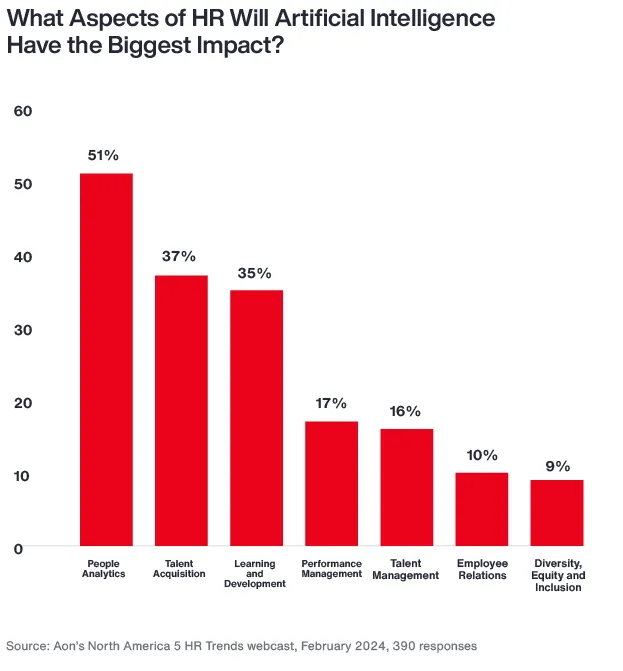
Recruitment Efficiency and Talent Acquisition
AI is transforming recruitment by automating repetitive tasks, improving candidate matching, and reducing time-to-hire. For instance, AI-powered tools can sift through thousands of resumes in seconds, identifying top candidates based on predefined criteria. According to a Gartner report on AI recruitment, 47% of organizations using AI in recruitment reported a reduction in hiring time by 50%. Additionally, platforms like LinkedIn Recruiter 2024 are leveraging AI to provide deeper insights into candidate pools, enabling recruiters to make data-driven decisions. By 2025, it's estimated that AI-driven recruitment tools will handle 80% of initial candidate interactions, freeing HR professionals to focus on strategic initiatives. Furthermore, a related article on AI in HR: From Onboarding to Employee Experience details more about how AI enhances the recruitment landscape.
How AI Is Revolutionizing Each Stage of Recruitment
Sourcing Candidates
AI algorithms are now capable of proactively identifying potential candidates before they even apply. These systems analyze publicly available professional data to create talent pools aligned with organizational needs. Smart sourcing tools can identify passive candidates who aren't actively job hunting but possess desired skills and experience. This approach expands the talent pipeline beyond active job seekers, often uncovering hidden gems that traditional recruitment methods would miss.
Screening Applicants
The initial screening process has been dramatically enhanced by natural language processing (NLP) capabilities. Modern AI systems go beyond simple keyword matching to understand contextual relevance and semantic meaning in resumes. For example, AI can recognize that experience with "customer relationship management" is relevant to a position requiring "client engagement skills," even when exact terms don't match. This contextual understanding ensures qualified candidates aren't filtered out due to terminology differences.
Candidate Assessment
AI-powered assessment tools are providing deeper insights into candidates' potential beyond what's visible on resumes. Video interview analysis can evaluate communication skills, cognitive abilities, and even cultural fit indicators. Gamified assessments measure problem-solving approaches and adaptability in simulated work scenarios. These tools provide standardized evaluation metrics that reduce the impact of unconscious bias while offering candidates engaging ways to demonstrate their capabilities.
Employee Engagement and Retention
AI is also playing a pivotal role in enhancing employee engagement and retention. Through AI-driven analytics, HR teams can monitor employee satisfaction, predict turnover risks, and implement proactive measures to retain top talent. For example, a Deloitte study on AI and employee retention found that organizations using AI to analyze employee feedback saw a 35% improvement in retention rates. AI-powered chatbots are also being used to provide personalized support to employees, addressing their concerns in real time. Platforms like Visier and Eightfold.ai are leading this space, offering solutions that combine AI and human insights to create a more engaged workforce. Additionally, check out the AI's Impact on Employee Experience and Compensation for insights on how compensation will evolve in tandem with AI.
The Science Behind AI-Powered Engagement
Predictive Analytics for Retention
The most sophisticated AI retention systems now incorporate multiple data streams beyond traditional engagement surveys. These platforms analyze communication patterns, collaboration networks, productivity metrics, and even external market factors to identify retention risk with remarkable accuracy. Some organizations report being able to predict potential resignations up to 9 months in advance, providing ample time for targeted intervention strategies.
Personalized Employee Development
AI is revolutionizing learning and development by creating truly personalized growth paths. These systems analyze an employee's current skills, career aspirations, and organizational needs to recommend specific learning opportunities, stretch assignments, or mentorship connections. As employees complete learning activities, the AI continuously refines its recommendations, creating a dynamic development journey that evolves with the individual.
Continuous Listening and Sentiment Analysis
Moving beyond annual surveys, AI-powered sentiment analysis tools provide ongoing insights into organizational health. These systems analyze anonymous feedback, communication patterns, and even the emotional tone of workplace interactions to identify emerging concerns before they become major issues. This approach enables HR teams to implement targeted interventions when and where they're most needed, rather than waiting for problems to escalate.
Ethical Considerations and Bias Mitigation
While AI offers numerous benefits, it also raises ethical concerns, particularly around bias and data privacy. AI systems are only as unbiased as the data they're trained on, and without proper oversight, they can inadvertently perpetuate existing inequalities. For instance, a Harvard Business Review article on AI bias in recruitment highlighted a case where an AI recruitment tool favored male candidates due to biased training data. To address this, organizations must implement robust governance frameworks and continuously audit AI systems to ensure fairness and transparency. Tools like Talent Llama are at the forefront of this effort, using AI to mitigate bias and promote diversity in recruitment. For more information on these issues, see the AI Bias in Recruiting: Ensuring Transparency, which discusses the need for transparency in AI applications.
Algorithmic Transparency
Leading organizations are now adopting "glass box" approaches to AI implementation, moving away from black-box algorithms toward systems that provide clear explanations for their recommendations and decisions. When an AI system recommends a candidate or flags a retention risk, it should be able to articulate the specific factors that influenced this determination. This transparency builds trust among stakeholders and enables human oversight to prevent algorithmic bias from influencing important decisions.
Diverse Data and Development Teams
To combat bias at its source, forward-thinking companies are diversifying both their training data and AI development teams. This includes gathering feedback from employees across different demographics, geographic regions, and organizational levels to ensure training data represents diverse perspectives. Similarly, AI development teams with varied backgrounds bring different viewpoints to algorithm design, helping identify potential blind spots that could lead to biased outcomes.
Regular Bias Audits and Impact Assessments
Leading organizations have established systematic processes for regularly auditing AI systems for potential bias. These audits examine outcomes across different demographic groups to identify any disparate impacts. Some companies have even implemented "algorithmic impact assessments" similar to environmental impact studies, evaluating potential consequences before deploying new AI systems in sensitive HR applications.
The Human-AI Partnership
Despite advances in AI technology, the most successful implementations maintain humans at the center of HR processes. AI excels at analyzing vast datasets, identifying patterns, and handling routine tasks—but human judgment, empathy, and ethical reasoning remain irreplaceable. The most effective approach combines AI's analytical power with human emotional intelligence and contextual understanding.
Organizations achieving the greatest impact with AI in HR view it as an augmentation tool rather than a replacement for human professionals. AI handles data processing and pattern recognition at scale, while HR professionals provide the critical thinking, emotional intelligence, and ethical judgment that technology cannot replicate. This partnership approach ensures AI enhances rather than diminishes the "human" element in Human Resources.
Looking Ahead: Emerging Trends
As AI technology continues to evolve, several emerging trends are worth monitoring. Explainable AI is gaining prominence, with new techniques making complex algorithms more transparent and interpretable. Voice and natural language interfaces are becoming more sophisticated, creating more intuitive ways for employees to interact with HR systems. Additionally, the integration of AI with other emerging technologies like virtual reality for immersive learning experiences and blockchain for secure credential verification shows promising potential for HR applications.
Conclusion
AI is undeniably transforming the HR landscape, offering unprecedented opportunities to enhance efficiency, engagement, and decision-making. However, its successful implementation requires a balanced approach that prioritizes ethical considerations and human oversight. As we move into 2024 and beyond, HR leaders must embrace AI as a strategic ally while remaining vigilant about its potential pitfalls. The future of HR is here, and it's powered by AI—will your organization be ready?
Join our mailing list
Get the latest and greatest updates to your inbox!
About the Author
Human Capitalist
About The Author
As a recognized authority in Human Capital, I'm passionate about how AI is transforming HR and shaping the future of our workforce. Through my books Sprint Recruiting: Innovate, Iterate, Accelerate and High-Performance Recruiting, I've introduced agile methodologies that help organizations thrive in today's rapidly evolving talent landscape.
My research in AI-powered people analytics demonstrates that HR must evolve from administrative functions to strategic business partnerships that leverage technology and data-driven insights. I believe organizations that embrace AI in their HR practices will gain significant competitive advantages in attracting, developing, and retaining talent.
Through my podcast, The Human Captialist, and speaking engagements nationwide, I'm committed to helping HR professionals prepare for workplace transformation and technological disruption. Connect with me at www.trentcotton.com or linktr.ee/humancapitalist to learn how you can position your organization for the future of work.