TL;DR: Was Meta's AI-native restructuring a warning sign or a one-off misstep?
Short answer: It's a warning sign, because the failure wasn't the technology. Meta attacked headcount when the real problem was structural, and the numbers it produced prove it.
Key stats you need to know:
- Meta cut about 8,000 roles (roughly 10% of staff) in May 2026, then killed a second, larger wave hours before it would have launched.
- Internal code changes rose 220% year over year, but features that actually reached users rose only 36%. Major technical and security incidents rose 40%.
- Employee sentiment fell from 74% favorable to 55% in Meta's own Pulse survey.
The leadership takeaway: Over the next 12 to 24 months, the companies that separate "how many people do we remove" from "which work should stop existing" will avoid paying twice for the same coordination.
Watch or listen: YouTube | Spotify | Purple Acorn
Reuters reported that Mark Zuckerberg had a plan to remake Meta as an "AI native" company, code-named Project OT for Organization Transformation, and that he killed the second phase of it hours before it was set to run. I've sat on both sides of a restructuring call like this one. I've been handed the decision to execute, and I've been in the room when it got made.
What happened at Meta is worth more than a headline, because it's a live test case for five specific mindsets I lay out in The FutHRist: 5 Mindsets of the Future HR Pro, and it shows exactly what happens when none of them are in the room. I go through the full breakdown on the podcast if you want the extended version.
The plan, according to Reuters, was sketched at a January 2026 leadership retreat: small human "pods" supervising AI agents, with internal scenario planning exploring cuts as steep as 60% on some teams. Meta went ahead with the first wave in May, cutting about 8,000 people. Then, hours before the planned second wave, Zuckerberg called it off and told staff he didn't expect further company-wide layoffs that year.
The easy read is that the technology wasn't ready and Zuckerberg overreached. That read is comfortable. It's also wrong, because it treats the reversal as a tech problem instead of a design problem. Look at what the company's own internal data showed instead: code output up 220%, user-facing features up only 36%, and major technical and security incidents up 40%. Four numbers, and nobody in the room appears to have been reading them the same way.
I call the diagnostic tool I use for moments like this the Five Mindsets, and I'll walk through what each one would have caught before the org chart got touched.
What actually happened with Meta's Project OT?
What actually happened is that Meta treated a structural bet as a headcount action, and the internal numbers it generated show the bet didn't land the way the plan assumed. Reuters' investigation, built on internal documents, recordings, and more than 20 sources, found that the January retreat produced a target structure: product teams of 10 to 20 specialists compressed into pods of three to five, with fewer management layers and AI agents absorbing the daily work in between.
The first wave landed in May, cutting roughly 10% of staff. Scenario planning for the second wave reportedly explored cuts as steep as 60% on some teams before Zuckerberg pulled it hours before launch. Meta has since acknowledged the scenario planning but said not every scenario under consideration was ever going to be pursued.
The follow-up detail is the one that matters most for HR. Business Insider later reported that Meta is now asking individual contributors in its Applied AI division, roughly 7,000 people reassigned earlier this year into a flattened structure with up to 50 ICs per manager, whether they'd like to move back into management. That's the company quietly rebuilding the layer it just told everyone was unnecessary.
What are the Five Mindsets, and why do they matter here?
The Five Mindsets are the lenses HR needs to catch a restructuring mistake before it ships, not after Reuters writes about it, a framework I built at The Human Capitalist and detail fully in The FutHRist. Each one operates at a different altitude, and Project OT gives you a clean failure example for all five.
- The Architect asks what the organization is actually built to produce before touching the org chart. Meta's foundation was a product organization shipping features to users. Cutting 10% of people doesn't change that foundation, it just runs the same structure with fewer hands. An architect would have asked what an AI-native company needs to look like structurally before asking who to cut first.
- The Engineer obsesses over the handoffs, because that's where ownership goes blurry. Security incidents rose 40% at Meta, and hackers reportedly used one of the company's own AI tools to access high-profile Instagram accounts. When you remove a human from a handoff, someone still has to own the check between what the agent does and what a person verifies. That ownership went undefined.
- The Scientist asks whether a metric predicts a business outcome or is just easy to count. Code output rising 220% while user-facing features rose only 36% is a measurement failure dressed up as a productivity win. It's the same trap HR falls into with time-to-fill: a speed metric that says nothing about whether the hire was right.
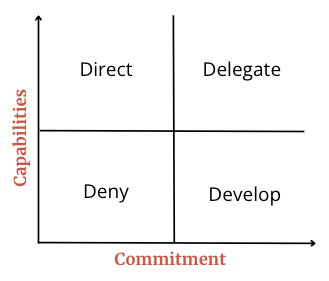
- The CEO mindset runs every function through what I call the Value of Work Matrix, plotting value to the organization against how much human judgment the work actually requires. Run through that lens, the question stops being "how many people do we remove" and becomes "which work should stop existing." Those produce two different plans.
- The Coach has the hard conversation, backed by data, before the cut. Meta's own sentiment score dropped from 74% to 55%. Someone inside the company almost certainly saw that number moving before the layoffs. The question is whether they were in the room, and whether anyone connected the surveillance backlash to the productivity drop it was producing.
How should C-suite leaders respond?
C-suite leaders and CHROs should respond by running the Five Mindsets before the announcement goes out, not after the reversal makes headlines.
- Name the foundation before the target structure. Ask what the organization is built to produce, the way the Architect mindset demands, before deciding how AI changes the shape of the teams that produce it.
- Assign the handoff, not just the headcount. Every point where an agent's output meets a human check needs a named owner in writing before go-live, not discovered after a security incident.
- Separate the metric you're watching from the outcome you're paying for. If code volume is up and user-facing value isn't, that's not a partial win, it's a signal the plan is measuring the wrong thing, the same trap I've written about in Is Headcount Planning Broken? The New FTE Math.
- Run the Value of Work Matrix before you run the layoff list. Weight it by hours. You'll find out whether you're removing work or removing the person who was quietly holding four kinds of work together, a distinction I've drawn out fully in Is Cutting the Micro-Team Boss the Right Call?
- Set the sentiment baseline before you cut, not after. A 19-point drop in favorable sentiment doesn't show up in your engagement survey as a layoff problem, it shows up as your best people leaving because they're the ones with options, which is exactly the blind spot I cover in Why Engagement Scores Hide Attrition Risk.
What this means for you as a leader
The tension at the center of Project OT is that Meta had some of the best engineering talent on the planet build the plan, run phase one, and kill phase two at the last minute, which means the failure wasn't a talent gap. It was a sequencing gap: structure and ownership questions that never got asked before the cut got made.
Leaders who run the Five Mindsets before they touch the org chart get the speed and the credibility with their board. Leaders who cut first get a quarter of savings, then quietly rebuild the management layer they eliminated, the way Meta's Applied AI division is reportedly doing right now.
Find out what FutHRist mindsets you have with this free assessment: https://www.trentcotton.com/futhrist-self-assessment/
FAQ
What was Meta's Project OT?
Project OT, short for Organization Transformation, was an internal Meta initiative conceived at a January 2026 leadership retreat to make the company "AI native," with small pods of employees supervising AI agents instead of traditional management layers.
Did Meta's AI restructuring plan work?
Partially and expensively. The company shipped a 220% rise in internal code changes but only a 36% rise in features that reached users, alongside a 40% jump in major technical and security incidents, evidence that the plan generated activity without generating proportional value.
Why did Zuckerberg cancel the second wave of layoffs?
Reuters reported that Zuckerberg halted planning for the second wave hours before the first wave's layoffs went out, though the exact trigger wasn't confirmed. The company's own internal numbers, including a sentiment drop from 74% to 55% and rising security incidents, suggest the AI-native model wasn't producing the gains the plan assumed.
What are the Five Mindsets?
The Five Mindsets, a framework from Trent Cotton at The Human Capitalist and detailed in The FutHRist, are five lenses (Architect, Engineer, Scientist, CEO, and Coach) that HR and business leaders use to catch structural, measurement, and ownership failures before a restructuring goes wrong.
What is the Value of Work Matrix?
The Value of Work Matrix is a tool from The FutHRist that plots work on two axes, value to the organization and the human judgment it requires, so leaders can decide which work should stop existing instead of only asking how many people to remove.
What should CHROs do first?
Run the organization's managerial and structural work through the Five Mindsets before any headcount announcement, set an engagement and sentiment baseline ahead of time, and name who owns each human-AI handoff in writing before go-live.