As the field of talent acquisition (TA) continues to evolve, so do the roles and responsibilities of TA leaders. Whether you're already in a leadership position or aspiring to be, understanding the shifting landscape is crucial for staying ahead. Recent insights from LinkedIn have shed light on the new skills that are increasingly demanded in TA leadership roles. Here's what you need to know to navigate this dynamic environment.
Emerging Skills for TA Leaders
What does it take to be a leader in recruiting? Well, the game has changed a lot over the last four years. Interestingly, LinkedIn has some new data to help us understand what skills are the most in demand for recruiting leaders.
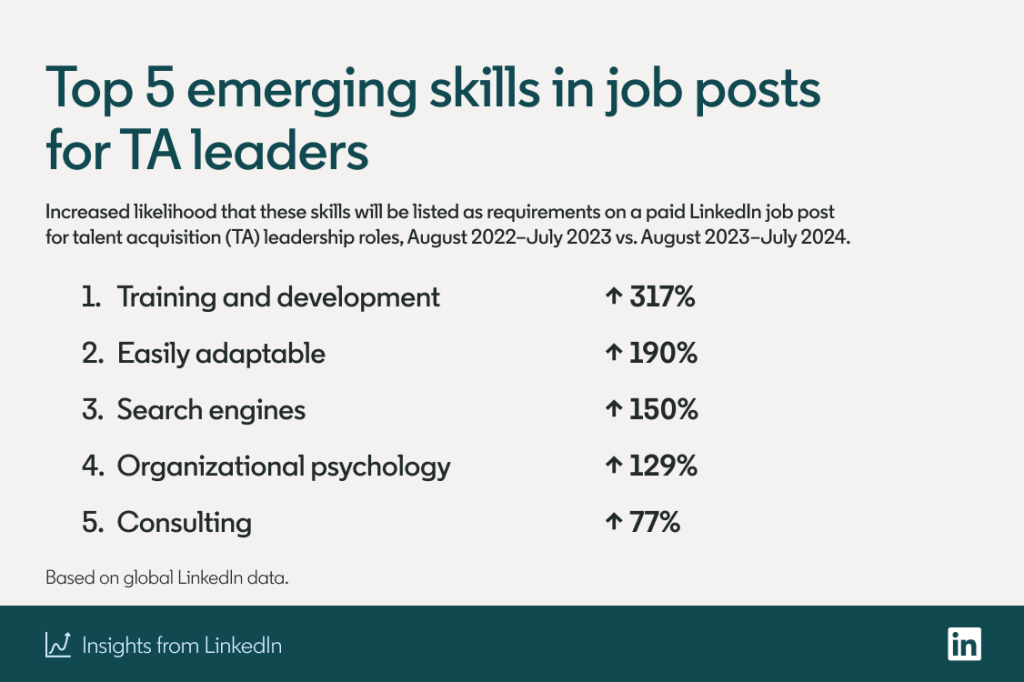
According to a comprehensive analysis of thousands of job listings on LinkedIn over the past two years, several skills have seen significant growth in demand for TA leaders:
- Training and Development: This skill has seen the fastest growth, with nearly one in three job posts (33%) requiring it in the past year, a substantial increase from just 8% the previous year. This shift underscores the importance of organizational upskilling, especially as AI technologies continue to transform the workplace.
- Adaptability: The rapidly changing business landscape demands leaders who can pivot quickly and effectively. Adaptability has emerged as a key skill for navigating the fluid and sometimes volatile environment many organizations face today.
- Consulting: TA leaders are increasingly expected to act as strategic advisors rather than mere order-takers. With technology handling more routine tasks, leaders are called upon to deliver strategic value and insights.
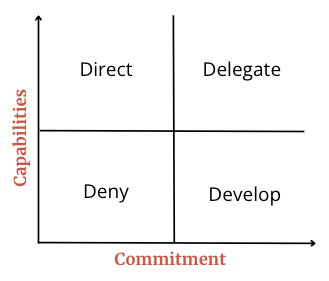
Ironically, many of these are in the seven traits I identified in my book High Performance Recruiting. If you want the full list, check out this infographic.
Core Skills That Remain Crucial
As the role of talent acquisition leaders evolves, certain foundational skills continue to be indispensable. These core competencies form the backbone of effective leadership, ensuring that TA leaders can seamlessly integrate emerging skills with established practices. In the midst of rapid changes and new challenges, these enduring skills provide a steady framework that supports both traditional and innovative recruitment strategies.
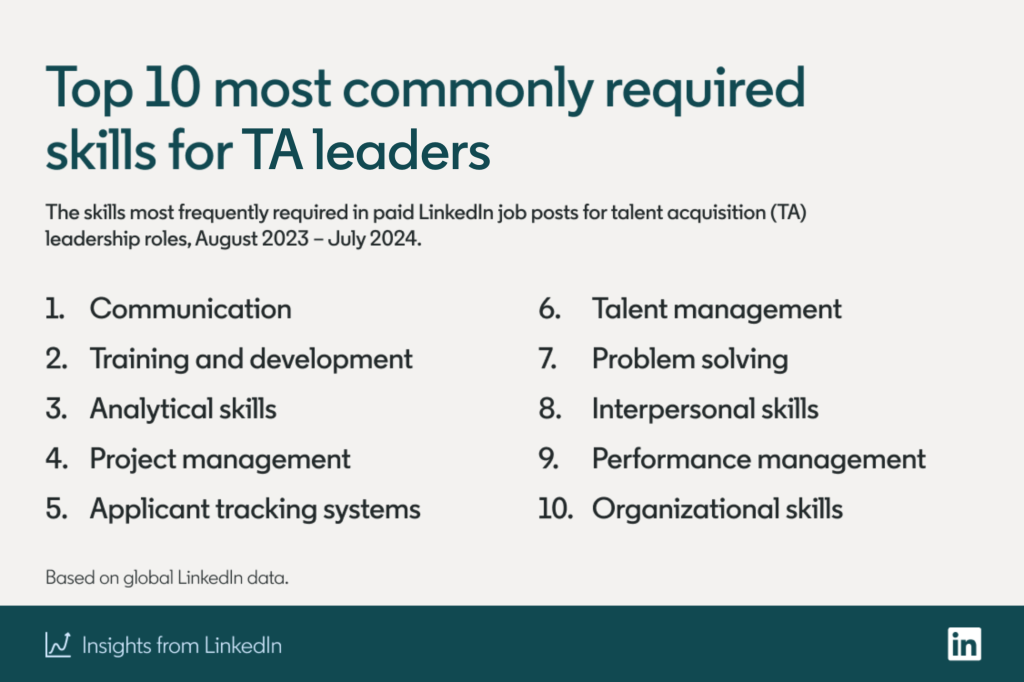
- Communication: A vital soft skill, communication continues to top the list of in-demand skills for recruiting leaders.
- Analytical Skills: The ability to analyze data and derive actionable insights remains critical as TA leaders navigate complex organizational challenges.
- Project and Talent Management: These skills highlight the expanding scope of TA leadership, blending traditional recruiting responsibilities with broader organizational development tasks.
Adapting to the Future of TA Leadership
As the role of TA leaders becomes more complex and strategic, continuous skill development is essential. Whether you're enhancing your training and development capabilities or honing your strategic advisory skills, staying ahead of industry trends will be key to success.
For those in talent acquisition leadership or aspiring to these roles, the future promises opportunities for those who can persevere and adapt. Embracing these changes and updating your skill set will position you for success in the evolving world of TA leadership.
How are you preparing to meet these new demands in your leadership journey?Title
Sources: LinkedIn Insights