TL;DR
Most HR problems do not live inside a function. They live at the handoffs between functions, and no one is measuring the handoffs. One Health researchers learned this the hard way with wild great apes in Central Africa. Disease outbreaks were not originating in the forest. They were originating at the interface between humans and apes, where no one had instrumented the boundary. The same pattern runs through every CHRO's most stubborn problems. Retention, engagement, first-year performance. The Scientist mindset, one of the five mindsets of the FutHRist, is how you stop chasing symptoms inside silos and start diagnosing the seam.
Key stats:
- Managers account for at least 70% of the variance in team engagement, per Gallup's State of the American Manager.
- A peer-reviewed One Health review in Animals documented respiratory virus outbreaks in wild chimpanzees, gorillas, and bonobos across a four-year window, all traced back to the human-ape interface.
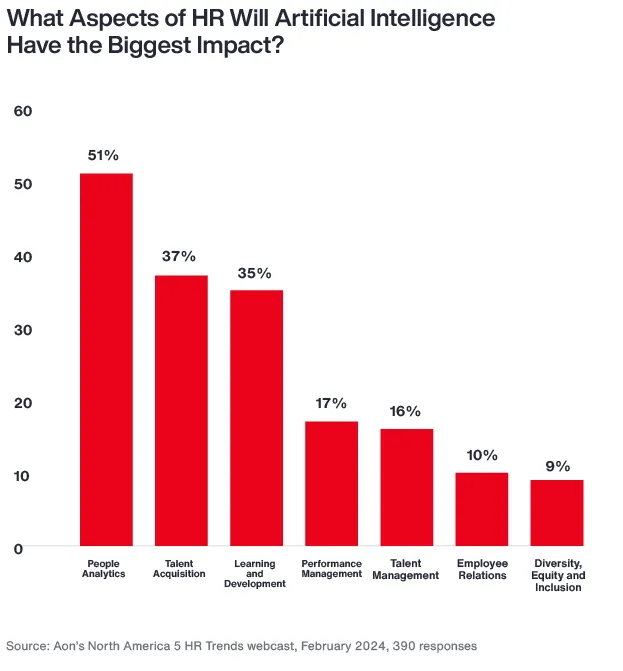
- Deloitte Human Capital Trends has consistently found that most companies rate people analytics a high priority while only a small fraction believe they have the capability to use it well.
The leadership takeaway: The next twelve months of CHRO differentiation will be won by leaders who instrument the three most important handoffs in their employee lifecycle and stop refreshing dashboards that describe the silos.
For decades, conservationists treated ape disease as a forest problem. Send in the vets, monitor the animals, protect the habitat. Then the numbers stopped making sense. Respiratory outbreaks kept hitting wild chimpanzees, gorillas, and bonobos in populations that had been carefully protected. A peer-reviewed One Health review catalogued the outbreaks across a four-year window and reached a conclusion the field had been avoiding. Ape health depends on the health of the human populations that interact with them. The pathogens were not originating deep in the forest. They were arriving at the seam, where tourists, park staff, and neighboring communities interfaced with the apes.
The updated IUCN great ape health guidelines now push that same point. Prevent disease at the interface, because treating it in the population once it lands is more expensive and less effective. Field research at Bwindi Impenetrable National Park made the operational version even clearer. The staff who spent the most time near the apes had the least access to preventive care and diagnostic testing. The system was watching the apes and watching the ecosystem and missing the humans who moved between them.
Sit with that for a second, because it maps almost perfectly onto every hard HR problem I have ever diagnosed.
The Problem Was at the Seam, Not in the Silo
Early in my career, I was staring at a two-to-four year turnover spike in a core retail banking sales role. The knee jerk answer was compensation. So I pulled the data by tenure band, overlaid pay, and the story fell apart. The one-to-two year group was retaining just fine. The five-plus year group was retaining fine. Pay was in line with ranges across all three bands. My clean little story about a comp cliff collapsed the moment the evidence showed up.
So I asked a different question. If it was not pay, where in the employee lifecycle was the decay happening? I ran focus groups across all three tenure bands and got answers so consistent they were almost boring. New hires stayed because the company was pouring investment into them. Coaching, training, structured development. Seasoned reps stayed because they had earned informal status and self-sufficiency. The two-to-four year group felt like the middle child. Too experienced for the ramp program to keep investing in them. Not senior enough for the flexibility the veterans enjoyed. They were expected to perform at a higher level with less support, and they watched the company invest heavily in the class behind them and reward the class ahead of them.
The problem was not inside any function. It was living at the handoff between "we are still investing in you" and "you have earned your stripes." That is a seam. Recruiting did not own it. Onboarding did not own it. L&D did not own it. The manager did not own it. Which meant, in practice, no one owned it. The same structural gap that let respiratory viruses cross into gorilla populations was letting good salespeople quietly walk out the door.
We designed a small experiment in one high-pressure metro market. Cohorts for the middle-tenure group. Master classes taught by district managers who loved to teach. Battle buddies drawn from the five-plus year veterans. Voluntary, so no one felt drafted. Participation hit around 80% of those invited, and the resignation rate slowed. More importantly, employees in the cohorts started telling their managers when they were thinking about leaving, before they had an offer in hand. That was the moment I knew we had named the right seam.
The Scientist Mindset, One of Five for the FutHRist
The Scientist is one of the five mindsets I lay out for the FutHRist in the book. It sits alongside the Architect, the Engineer, the COO, and the Coach. Each mindset does something the others cannot. The Architect sees the organization as a system. The Engineer instruments where the system breaks. The Scientist forms a hypothesis about why the system breaks and tests it against evidence. The COO connects the finding to revenue, cost, and growth. The Coach turns the finding into leadership behavior.
The Scientist is the one who refuses to start with a dashboard. A dashboard tells you turnover is 18%. Your CEO already knows that. What the CEO does not know is where in the lifecycle the 18% is being generated, which handoff is doing the damage, and what a small test would need to look like to prove the diagnosis. That is Scientist work. Deming said it best. In God we trust, everyone else must bring data. The Scientist FutHRist brings the data, but only after naming the seam they think is generating the outcome, writing a hypothesis in one sentence, and designing the cleanest test they can afford.
Gallup's variance decomposition work is a useful anchor here. Managers account for at least 70% of the variance in team engagement, which in operating terms means the transition from individual contributor to first-time manager is one of the highest-leverage seams in your entire employee lifecycle. Instrument that handoff and you have moved more of your engagement variance than a company-wide program will move in a year.
What This Looks Like in the Next 90 Days
Pick three handoffs. Not thirty. Three. Sit with your leadership team and name the transitions in your employee lifecycle where the most business value is created or lost. For most enterprises those are onboarding to first assignment, individual contributor to first-time manager, and the promotion or comp adjustment that follows a strong review cycle. Write them on the whiteboard. Give each one a named owner.
Map each handoff to a business KPI the CFO cares about. Revenue per rep. Fully loaded cost of a regrettable exit in a revenue-critical role, inclusive of vacancy and ramp for the replacement. Customer retention on accounts owned by first-year AEs. If you cannot draw the line from the handoff to a number in the P&L, the seam is not ready to instrument. Keep working on the connection.
Design one 30-day test per handoff. One region. One function. One cohort. Small enough to run without a steering committee. Structured enough to produce a signal against a matched comparison group. The point is learning, not launching.
Change how you present findings to the executive team. Lead with the question, then the hypothesis, then the evidence, then the recommendation, then the projected outcome. I walk through the full sequence in Your HR Data Means Nothing Without This Mindset. It is the format scientists use, and it is dramatically more persuasive than a slide deck full of charts.
Say what the data cannot tell you. Every readout should name the limits of the analysis before an executive names them for you. That is how trust gets built. The McKinsey work on people analytics maturity has found that companies with mature capability meaningfully outperform peers on total shareholder return, and every one of those functions I have seen operates with this kind of intellectual honesty baked in.
What Winning Looks Like
The CHRO who wins the next twelve months is the one whose team can name the three handoffs where their business is quietly losing value, and who has a running experiment on each one by the end of this quarter. The CHRO who loses is the one still refreshing a dashboard that tells the CEO turnover is 18%. The gorillas were never sick because of what was happening in the forest. Your best people are not leaving because of what is happening inside the function. Look at the seam.
Do you want to know where you stand on the 5 mindsets? Take the assessment here.
FAQ
Why do most HR problems show up at the seams instead of inside a function?
Functions are instrumented to measure what they own. No function is instrumented to measure what it hands off. Recruiting closes a req and hands the new hire to onboarding. Onboarding runs its curriculum and hands the employee to the direct manager. Each transition has a before-state and an after-state that live in different systems, with no single owner and no single dashboard, which is where the decay hides.
What is the difference between a seam problem and a function problem?
A function problem is contained inside one team's system and metric, like time-to-fill or training completion. A seam problem is a decay in the transition between two functions, like the drop in performance between the last week of onboarding and the first month with a manager. Function problems get solved by tuning the function. Seam problems get solved by naming the handoff, giving it an owner, and testing what is degrading it.
What are the five mindsets of the FutHRist?
The five mindsets are the Architect, the Engineer, the Scientist, the COO, and the Coach. The Architect sees the organization as a system. The Engineer instruments where the system breaks. The Scientist forms hypotheses and tests them. The COO connects findings to revenue and growth. The Coach turns findings into leadership behavior.
How does a Scientist CHRO know they are doing science and not reporting?
Ask what the last three deliverables were. If the answers are dashboards, refreshes, and executive readouts, the team is reporting. If the answers include a written hypothesis, a small test, and a recommendation with a projected outcome, the team is doing science. The Scientist mindset is a sequence, not a title.
Which handoffs matter most for a CHRO to instrument first?
The three that carry the most business value in most enterprises are onboarding to first assignment, individual contributor to first-time manager, and the promotion or comp adjustment that follows a strong review cycle. Start there, tie each one to a KPI the CFO recognizes, and design a 30-day test in one region or function.
What should CHROs stop doing to make room for this work?
Stop refreshing dashboards that no one uses to make a decision. Redirect that analyst time toward hypothesis-driven work on the top three handoffs, and the capacity shows up without any headcount or new tools.