TL;DR
Short answer: Because AI absorbs the small, visible task completions people used to count as proof of a good day, and the people who use AI most feel that loss first. ADP's People at Work 2026 report shows daily AI users are more engaged and less stressed than non-users, yet four times more likely to say they are less productive than they could be. That gap measures perception, and HR owns the half of the problem that sits in how productivity gets defined.
Key stats you need to know:
- Daily AI users were 4x more likely than non-users to say they were less productive than they could be, in a survey of more than 39,000 workers across 36 markets (CNBC).
- 30% of daily AI users are fully engaged at work, compared with 14% of workers who never use AI (CNBC).
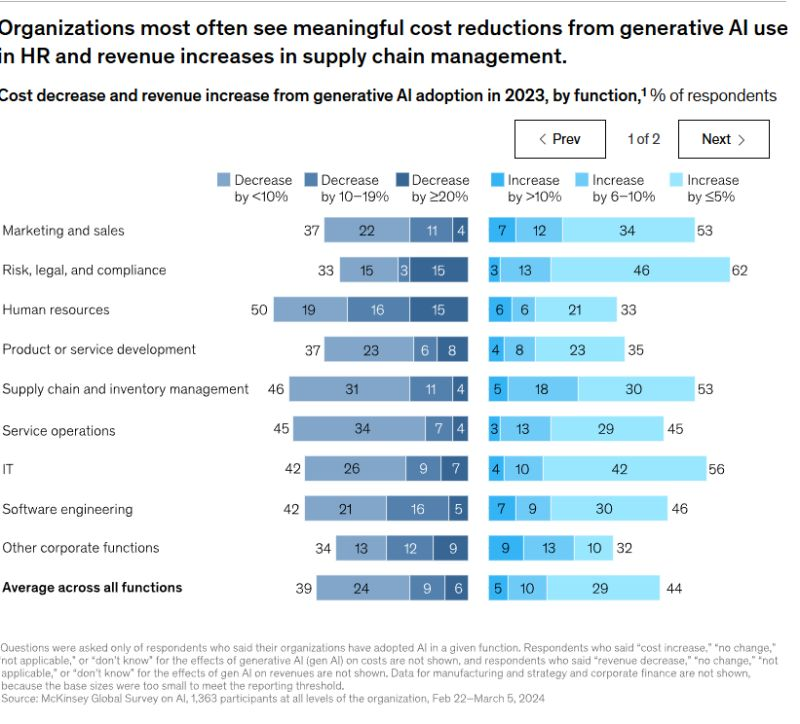
- 80% of respondents in McKinsey's 2026 State of AI survey say AI improved their individual productivity, yet only 37% attribute any EBIT impact to AI use (McKinsey).
The leadership takeaway: Over the next 12 to 24 months, the CHROs who get credit for AI results will be the ones who rebuild how productivity is defined before their dashboards tell the board the investment failed.
Why Do Daily AI Users Say They Are Less Productive Than They Could Be?
Daily AI users say they are less productive because AI absorbs the checklist work that used to make a day feel finished, and the work that remains is harder to see and harder to count. ADP Research surveyed more than 39,000 working adults across 36 markets for People at Work 2026. Half use AI at least weekly and one in five use it nearly every day (ADP Australia).
The daily group scored better on nearly every experience measure. They are more engaged, they report less stress, and they feel better about their teams. They are also the group most likely to say they could be producing more.
ADP is direct about what the number shows. Its researchers state they have no way of measuring the actual productivity of these workers, and they note that productivity might in fact have increased while people perceive doing less of the work themselves (ADP Research). Leaders quoting the 4x figure should also know it is a ratio. The public materials I reviewed do not state the underlying percentages. A 4x gap between 5% and 20% tells a different story than 4x between 20% and 80%. So as great as the 4x number sounds, I am a bit skeptical without this data point.
The finding lands on an anxious workforce. Only 22% of workers globally are confident their job is safe from elimination, and workers who fear losing their job are less engaged and less productive (PR Newswire). Read the AI result against that backdrop.
What Is the Completion Deficit, and Why Does It Matter in the Boardroom?
The Completion Deficit is my term for the loss of small, countable task completions that employees treated as proof of their own productivity before AI took that work over. I built the framework from the ADP data because it explains a result that confuses most leaders: the people closest to the technology report the least progress. ADP's own talent takeaway points the same direction: as more checklist work moves to AI and people shift to longer-term strategic projects, how productivity gets tracked has to be reevaluated (PR Newswire). Three forces drive the deficit.
- Vanished milestones. The drafted email, the formatted report, the closed ticket. These were the visible receipts of effort. AI produces them in seconds, so the employee has nothing to point to at the end of the day.
- Relocated effort. Work shifts toward review, judgment, and direction. ADP notes that employees spend more time on complex, strategic work that feels less tangible and is harder to measure (ADP Australia).
- Unchanged scorecards. Managers still count activity. The employee draws the reasonable conclusion that the old measure says they did less.
This is a boardroom issue because your productivity metrics were calibrated to task volume, and AI collapses task volume. If the scorecard stays the same, your best adopters will report underperformance, your dashboards will agree with them, and the investment case for AI will look weaker than the real results.
McKinsey's 2026 State of AI survey shows the disconnect from the other side. Eighty percent of respondents say AI improved their individual productivity, while 37% attribute any EBIT impact to AI use (McKinsey). Both findings can hold at once. People can feel faster than before and still short of what is possible, while the company cannot trace the gain to operating profit. I walk through the McKinsey numbers in this video.
It is the same planning flaw I described in why the FTE model breaks under skills-based hiring and AI agents. In a boardroom, I'd say it this way: you are measuring a new kind of work with a ruler built for the old kind. It's time to reexamine HOW and WHAT we measure in productivity.
How Should CHROs Respond to the Completion Deficit?
CHROs should respond by testing whether the gap is perception or output, then redefining productivity in outcome terms before the next planning cycle. Here is the playbook I'd run, using the mindsets of The FutHRist.
- Run the Scientist test first. Ask the ADP question, "Are you less productive than you could be?", of your own people and cut the answers by AI usage frequency. Then pair it with objective output for the same groups: cycle time, quality, throughput. Form a hypothesis that can die. If the heavy users report low productivity and their output is flat, you have an implementation problem. If their output is up, you have a perception problem. The two call for different fixes, and the survey alone cannot tell you which one you own.
- Redefine productivity by outcome, role by role. Replace task counts with the result each role exists to produce. Project-based work already forces this discipline, as I covered in what the Hollywood Model means for HR leaders. Publish the new definitions before you ask managers to use them.
- Coach managers to name the invisible work. Add three questions to the one-on-one. What did AI take off your plate this week? What did you do with that time? What judgment call did you make that the tool could not? These questions return the sense of accomplishment that the deficit removes, and they give managers material for fair evaluation. This is the heart of the CHRO's Coach mindset.4. Audit adoption for value, not volume. Move the measure from volume to value. Count the workflows where AI changed a decision or a result. Stop reporting seats activated and prompts per week as proof of progress.
- Settle the job security question. With 22% of workers confident their job is safe, a productivity reframe lands on fear unless you address it directly (PR Newswire). Tell people which tasks AI will carry, which judgment stays human, and how performance will be assessed. This closes the gap I wrote about in the CHRO playbook for the AI readiness gap.
What This Means for You as a Leader
Your heaviest AI users are your most engaged and least stressed employees, and they are telling you your measurement system no longer describes their work. That is useful information. The leader who reads it as a morale problem will launch a wellness initiative. The leader who reads it correctly will redesign the scorecard.
I lived the other side of this. Before AI, I spent a large share of my week on research and data analysis. I loved the work, and doing it right took hours of mental focus. Over time I honed research and analyst agents that carry most of the heavy lifting. My attention now goes to what the data says, the strategy, and the so what. That returned time and focus lets me go deeper on each topic. I complete fewer tasks by hand, and the work is better for it. I only see that gain because I stopped counting tasks.
This is where two FutHRist mindsets work together. The Scientist refuses to accept the survey result as a conclusion and tests it against output. The Coach takes whatever the test shows and rebuilds how managers talk about contribution. Skip the Scientist and you fix the wrong problem. Skip the Coach and you hold the right data while your best adopters stay convinced they are underperforming.
The stakes rise as teams concentrate on fewer high performers with more AI leverage, a pattern I covered in why all-star teams fail in the AI era. Those are the people most likely to feel the deficit and the people you can least afford to lose. Test the gap this quarter, and change the scorecard before the board changes the budget.
I break down frameworks like this every week on The Human Capitalist. The Scientist and Coach mindsets are two of the five covered in my book, "The FutHRist: 5 Mindsets of the Future HR Pro," out this fall. You can find where you stand with the assessment at trentcotton.com/futhrist-start-here.
Resources for HR Leaders
If you found this useful, here's what I've built for HR executives dealing with the same challenges.
- The FutHRist Planner (Free): A planning tool for HR leaders navigating AI-driven transformation.
- AI Ethics in Recruiting (Free): A framework to evaluate AI risk in your hiring stack.
- FutHRist Team Assessment Workbook: Diagnose your team's readiness for the future of work.
- The Value of Work Matrix Toolkit: Quantify workforce decisions and defend your seat at the table.
- Sprint Recruiting Bootcamp: Cut time-to-fill without cutting quality.
- FutHRist Team Workshop Kit: Run a future-of-work strategy session with your HR team.
FAQ
Are daily AI users less productive?
The ADP data does not show that. It shows daily users are four times more likely to say they are less productive than they could be, and ADP states it cannot measure actual productivity in this survey (ADP Research). Treat the result as a perception signal to test against output.
Are heavy AI users more frustrated than other employees?
No. In ADP's 2026 data, daily AI users report higher engagement, 30% fully engaged against 14% of non-users, and lower negative stress, 11% against 23% (CNBC). Their gap is in perceived productivity, and the report does not show broader frustration.
What is the Completion Deficit?
The Completion Deficit is Trent Cotton's framework for the loss of small, visible task completions that employees used as proof of productivity before AI took that work over. It explains why high AI users can feel less accomplished while output holds or rises.
How should CHROs measure productivity in an AI-enabled workforce?
Define productivity by outcome for each role, then track objective measures such as cycle time, quality, and throughput next to self-reported views. Task counts and activity logs lose meaning once AI handles the repeatable work.
What should managers ask employees who use AI daily?
Ask what AI took off their plate, what they did with the time, and what judgment call they made that the tool could not. These questions surface relocated effort that traditional activity measures miss.
What should CHROs do first?
Run the ADP productivity question inside your own organization, cut it by AI usage frequency, and compare it with output data for the same groups. The comparison tells you whether you face a perception problem or an implementation problem.