TL;DR
Short answer: Mostly not the candidate, and mostly not the algorithm either. My guest on this episode, recruiter and author Mike Peditto, breaks every applicant into four buckets, and the bucket that should worry CHROs the most is the one full of people who actually meet the listed qualifications and still never hear back.
Key stats you need to know:
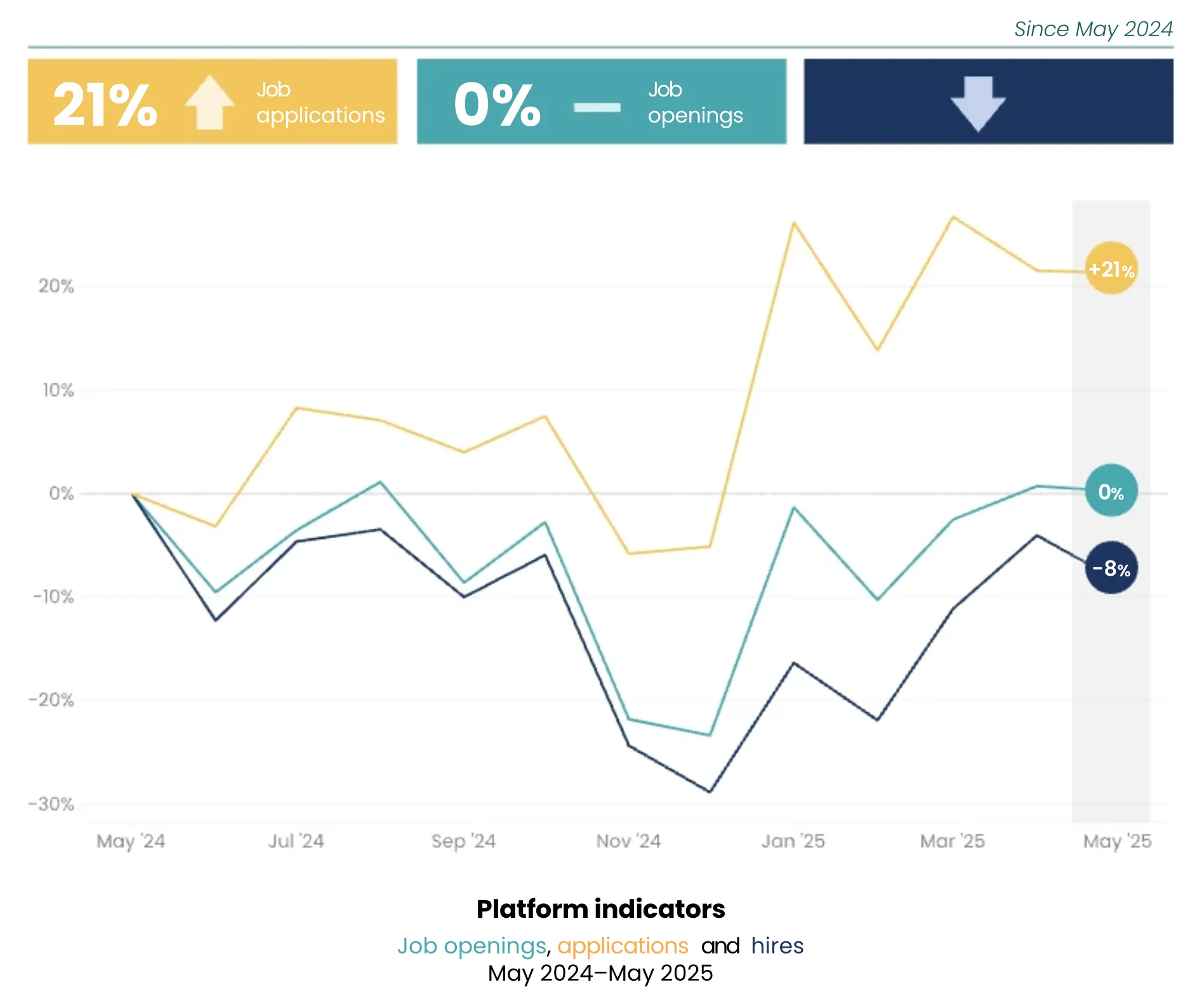
- The average open role now pulls in more than 300 applications, roughly triple the 2021 baseline, according to a 2026 hiring benchmark (MetaIntro).
- Candidates today are roughly 50% less likely to reach an interview than they were five years ago, from that same benchmark (MetaIntro).
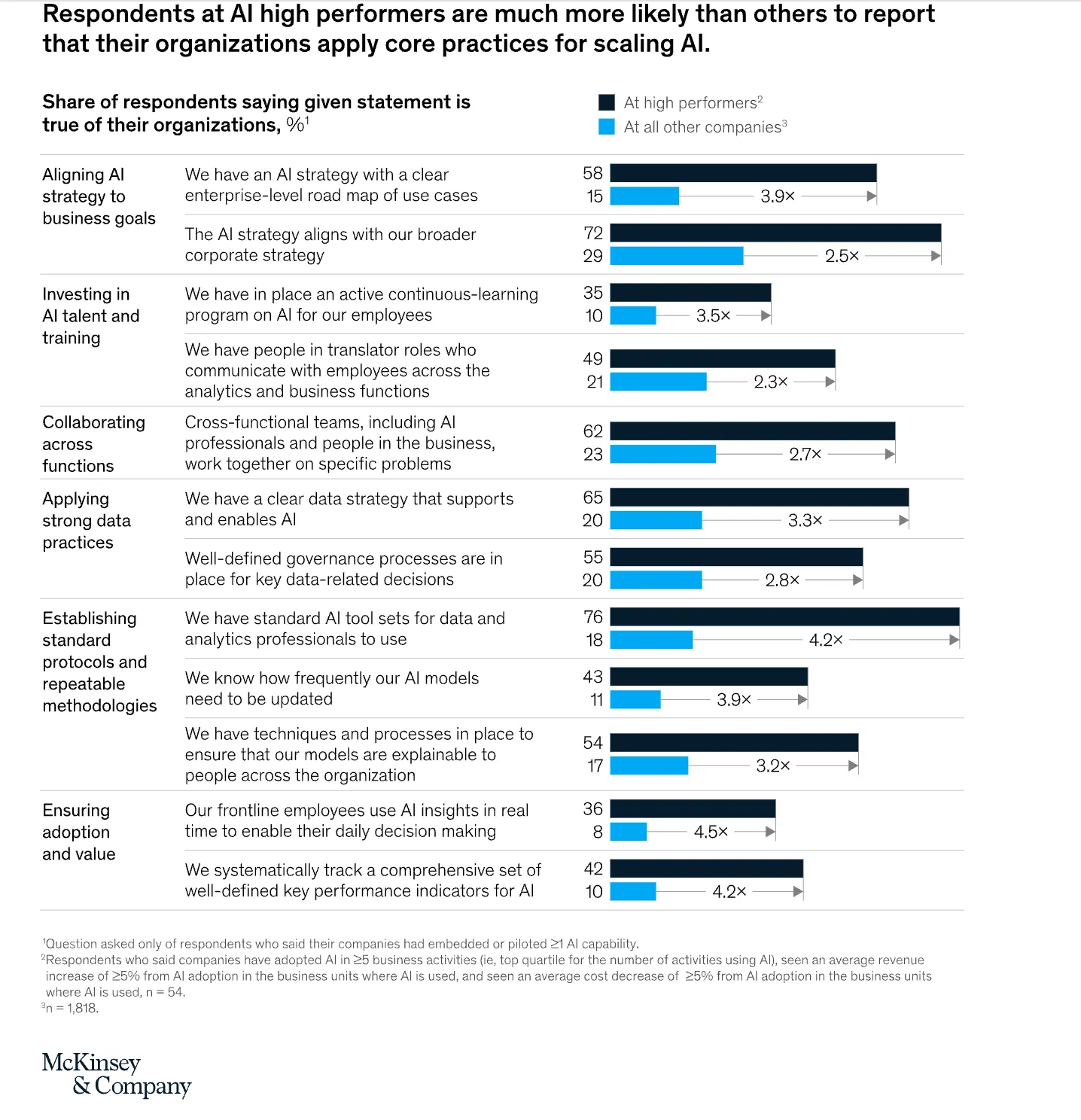
- 85% of knowledge workers already use AI at work, but only 29% have actually changed how they work because of it (Atlassian).
The leadership takeaway: The volume problem gets all the attention because it's loud and easy to measure. The trust problem is what's actually costing you good hires, and it lives in how you write the requirements and who you let make the judgment call, not in how fast your applicant tracking system can sort resumes.
Watch the full conversation on The Human Capitalist: Mike Peditto on YouTube | Listen on Spotify: The Human Capitalist Podcast
What Are Mike Peditto's Four Buckets of Job Applicants?
Every applicant for a given role lands in one of four buckets, and only one of them is worth losing sleep over. Mike Peditto, who built a following of more than 400,000 across TikTok and Instagram under the name Realistic Recruiting before writing "Yes, You Are Being Judged: A Realist's Guide to Job Searching," walked me through it on this episode, and it's the clearest explanation I've heard for why the funnel feels broken on both sides.
Bucket one is people with no real connection to the role at all, like a nurse applying for a senior software engineering manager position with zero technical background. Bucket two is what Mike calls the "shoot your shot" crowd, candidates who hit maybe 30% of the requirements and are applying anyway because that approach occasionally worked in a looser labor market a few years back. It doesn't work now. Bucket four is the 5 to 10% who are the genuine fits: right industry, a competitor on the resume, the exact skill the role needs. That bucket sits largely outside a recruiter's control, a matter of who happens to be looking at the right moment.
Bucket three is the one that should actually keep a CHRO up at night. These are candidates who meet the stated qualifications on paper and still don't advance, and Mike's read is that a clearer, more honest job posting could help a lot of them self-select correctly before they ever apply, saving everyone the wasted cycle. That diagnosis lines up with what the data shows industry-wide.
Data of more than 100 million applications found candidates are about 50% less likely to reach an interview than five years ago (MetaIntro), and recruiters have screened resumes in single-digit seconds since long before AI entered the picture (HR Dive). Bucket three candidates aren't losing because they're unqualified. They're losing because nobody told them, or the recruiter, what actually mattered before they spent the time applying, the same gap I explored when I asked whether HR is anti-worker or just built poorly.
Is It the Job Description's Fault, or the Candidate's?
It depends, and usually it's both at once. That was Mike's answer when I asked him about the comment debate that followed one of his videos, where he films himself judging a resume's fit in the time it takes to tear apart a rotisserie chicken, a bit he uses because 15 to 20 years of recruiting experience means he genuinely doesn't need more than a few seconds to know whether someone belongs in the pile.
His fix isn't a better filter. It's a better job description, one that functions as what he calls a scorecard rather than a wish list. That means separating the skills a candidate needs on day one from the skills they'll pick up on the job, something almost no posting does today. It means a short paragraph from the actual hiring manager instead of boilerplate copy, and the full interview process laid out up front, step one through however many steps exist. Mike points to Zapier and Ashby as companies doing this well, and he's done it himself, once writing a senior social media manager posting that named the role's burnout pain points to filter for people who actually wanted that fight.
He also sends interview questions in advance for first-round screens, and he's clear that this isn't lowering the bar. It's giving candidates the chance to show up as their sharpest selves instead of rewarding whoever happens to think fastest on their feet in a cold room. On skills-based hiring, Mike is candid that assuming five years of experience implies strong critical thinking was never better than a coin flip, and transferable-skills hiring is a hard sell given the pressure to do more with less.
The research backs the difficulty up. Harvard's Project on Workforce found that of firms that dropped degree requirements, only 37% actually changed their hiring behavior, while roughly 45% saw no real difference at all (Harvard Project on Workforce), which is exactly the gap I flagged when I asked whether HR itself was built for a workforce that no longer exists.
Should HR Own the Company's AI Strategy Alone?
No, and setting HR up to own it alone is close to setting HR up to fail. Two pieces of industry news came up on this episode that made the point better than either of us could have planned. ServiceNow framed its recent HR announcements around an "agent to agent" strategy, with group vice president John Phillips describing the goal as agents that can "talk to any agent and be able to hand off with any agent" (TechTarget). Around the same time, Atlassian put HR at the center of how AI and human work get coordinated, arguing HR must move from managing headcount to architecting total capacity, human and agentic combined (Atlassian).
Mike's read, and mine, is that HR belongs at the center of that conversation but not alone in it. His phrase for the alternative was blunt: turning HR into "the sacrifice" so the rest of the business can point somewhere when an AI rollout goes sideways. I saw that risk firsthand at a Fortune 100 workforce planning conference, watching executives assign AI ownership to HR without being able to answer a single follow-up question about it.
A lot of blind leading the blind. Atlassian's own data shows why the stakes are real: 85% of knowledge workers already use AI, but only 29% have changed how they actually work as a result (Atlassian), a gap I've also written about in asking whether HR is becoming irrelevant if it keeps managing that shift with old tools. HR can run point. It cannot be the only department in the room.
What This Means for You as a Leader
The hiring funnel isn't broken because AI made it faster. It's exposed because AI made the volume too large to hide the parts that were always sloppy, vague job descriptions, screening rubrics nobody agreed on, and an assumption that experience alone predicts judgment. Bucket three candidates were always out there. They just used to be a smaller, quieter problem.
Winning here doesn't mean writing a perfect job description or finding the one framework that cracks hiring for good. Mike was direct about that too: there's no universal fix, because outcomes are person-specific and role-specific every time. What leaders can control is whether the job posting tells the truth, whether the interview process is transparent before day one, and whether HR gets real support instead of sole ownership when the AI conversation starts. Companies that fix those three things will keep more of their bucket three candidates. The ones that don't will keep blaming the algorithm for a problem they wrote themselves.
Mike Peditto's book, "Yes, You Are Being Judged: A Realist's Guide to Job Searching," is built on exactly this kind of unfiltered, from-the-room honesty, and you can find him and his work at mikepeditto.com.
If this conversation about HR's role in the AI shift hit close to home, I get into the same tension in the five mindsets behind The FutHRist, and you can take the eight-minute self-assessment at trentcotton.com/futhrist-start-here.
FAQ
What is Mike Peditto's four-bucket hiring framework?
It's a way of sorting every job applicant into one of four groups: no real connection to the role, a "shoot your shot" candidate meeting roughly 30% of requirements, a candidate who meets the listed qualifications but still doesn't advance, and the genuine 5 to 10% fit. The third bucket is the most fixable and the most frustrating, because a clearer job description could help those candidates self-select correctly before they apply.
Is a hiring mismatch the job description's fault or the candidate's fault?
It depends, and it's usually a mix of both. A vague or inflated job posting invites the wrong applicants in, while some candidates apply broadly regardless of fit. The fix isn't picking a side, it's writing job postings that function like a scorecard so both sides know the real bar before anyone wastes time.
Why are recruiters buried in applications right now?
AI-assisted apply tools have made it easy to submit far more applications with far less effort, and the average open role now draws more than 300 applicants, roughly triple the 2021 level (Ashby data via MetaIntro). More volume hasn't meant more qualified candidates reaching interviews, it's meant the opposite.
Does skills-based hiring actually work in practice?
Rarely, so far. Harvard's Project on Workforce found only 37% of firms that dropped degree requirements actually changed their hiring behavior, while about 45% saw no real change at all (Harvard Project on Workforce). The intent is often genuine. The follow-through usually isn't there yet.
Should HR own the company's AI strategy by itself?
No. HR belongs at the center of decisions about how AI and human work get coordinated, but owning that alone, without support from the rest of the business, sets HR up to take the blame when a rollout struggles. Recent moves from ServiceNow and Atlassian both point to AI strategy as a shared, cross-functional effort, not an HR-only mandate.
What should job seekers do differently in 2026?
Decenter yourself from any single rejection. Getting passed over doesn't mean a worse candidate got the job, it often just means someone else was a slightly closer match for that specific role at that specific moment. There's no single trick, whether it's the job description, the application format, or the resume, that guarantees an outcome, because hiring is inherently person-specific and role-specific every time.