TL;DR
- PwC's 2026 Global AI Jobs Barometer analyzed over a billion job ads across 27 countries and found AI does one of two things to a role. It either professionalizes it, stripping out routine work so human judgment becomes the constraint, or democratizes it, making the role easy enough for someone with less expertise to do.
- Professionalized roles are growing twice as fast and their salaries are growing 42% faster than democratized roles. Same org chart, two different companies.
- Entry level took the first hit. AI-exposed entry-level roles are seven times more likely to require skills that used to appear late in a career.
- HR's exposure is that this shows up in the P&L about 18 months later as attrition cost or productivity drag, and a CFO will see it before HR explains it.
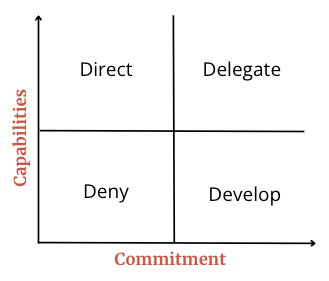
- The fix starts with two questions per role: how much enterprise value does the work create, and how much focused attention does it take. That is the Value of Work Matrix.
🎥 Watch the full version on YouTube: https://www.youtube.com/watch?v=dyOjJRql7vU
🎧 Listen on Spotify: https://open.spotify.com/show/57xtYAUsIYrg7gQ0a6RFwc
Your workforce is not being leveled by AI. It is being split, and in most organizations it already happened.
One track leads up. The other leads sideways. The people on the sideways track rarely know they are on it, because nothing about their title or their spot on the org chart changed. Same reporting line, same job description, same review cycle. Different trajectory.
I have spent 20 years in HR watching organizations get blindsided by changes they saw coming and chose not to act on. This one is different in a specific way. The data exists, it is public, and it is three months old.
The report that names it
In June, PwC published its 2026 Global AI Jobs Barometer. More than a billion job ads across 27 countries and six continents. It is the largest labor data set I have seen anyone run through an AI lens.
The finding that matters for HR is that AI does not do one thing to a job. It does one of two things, and which one it does decides the role's future.
Professionalized roles. AI absorbs the routine work, human judgment becomes the bottleneck, and the role gets more valuable. PwC puts radiologists and recruiters here.
Democratized roles. AI makes the role easier for someone with less expertise to perform, and the role gets less valuable. PwC puts IT service managers and medical secretaries here.
Then the numbers: professionalized roles are growing at twice the rate of democratized ones. Salary growth in the professionalized track runs 42% faster, and that comparison is against the other track, not against some blended market average. Companies with the highest AI exposure grew headcount 52% in 2025 against 36% for the least exposed. The wage premium for AI skills now averages 62%, up from 57% the year before.
That is signal, and it points at something uncomfortable. There are two different companies living inside every org chart that looks unified from the outside.
Entry level took the first hit
PwC ran a second analysis on 2.4 million US entry-level roles. Inside the AI-exposed slice, those roles are seven times more likely to require skills that used to appear much later in a career. Strategic decision-making, stakeholder management, judgment. PwC calls it seniorization.
Sit with the gap. In the most AI-exposed occupations, 52% of the new skills showing up in entry-level postings were skills that historically belonged to experienced workers. In the least exposed occupations, 7%.
And the two groups moved in opposite directions. Redrawn entry-level roles grew 35% since 2019. Traditional entry-level openings shrank 10%.
The rebuild is not happening evenly. It concentrated exactly where you were least likely to be watching, because entry level has never been where HR spends its strategic attention. We staff it, we measure time to fill on it, and then we move on to the roles that feel like they matter to the business.
Which means the job most companies still describe as the on-ramp has been quietly rebuilt into something a new graduate cannot reach. The posting says entry level. The skill list says senior. Nobody updated the pipeline, the onboarding, or the pay band to match.
Run it through value and focus
In my day job I spend most of my time in workforce data, so a report like this is the kind of thing I want to sit with for a week. But you do not need the report to act on it. Run your own roles through something I have been building for years. I call it the Value of Work Matrix, and it strips the question down to two things:
- How much value does this work create in driving enterprise value?
- How much focused attention does it take to do?
PwC's professionalized track is what happens when AI pulls the low-focus work out of a high-value role and leaves the human holding only the part that requires judgment. That job gets smaller in volume and bigger in value. It is a promotion in function without a new title, and most comp structures have no way to see it.
The democratized track is what happens to a role that was never high value to begin with, once AI makes the appearance of expertise cheap to fake. AI did not create that vulnerability. It priced it.
Same org chart. Same job titles. Two completely different trajectories. And the difference was visible before anyone ran a single number, if anyone had been looking at value and focus instead of headcount and tenure.
When HR misses it, the miss shows up in the P&L about 18 months later as attrition cost or productivity drag. That is exactly the kind of number a CFO tracks closely and an unprepared HR team cannot explain. It is also the moment a CEO looks around, decides HR is not connecting the dots, and goes and does the work himself.
Ryan Breslow at Bolt eliminated his HR department and told the press the problems disappeared when he let them go. I covered that one earlier in this series. It got read everywhere as a cost decision. What it looked like to me was a CEO who concluded his HR team was not seeing what he needed them to see. That is the quiet version of getting fired, and it does not come with a headline.
The FutHRist is now available on AMAZON!
Where the five mindsets land on this
The FutHRist runs on five mindsets. Here is where each one shows up in this specific problem.
- The scientist sees it first, through investigation rather than a hunch or a headcount review. Which of your critical roles are professionalizing, and which are commoditizing? If your monthly people report does not distinguish between the two, you are reporting. A scientist investigates and then recommends.
- The architect redesigns the system. You are probably still paying on tenure. AI already took the routine work out of half your roles. Tenure stopped earning that money the moment AI entered the picture. The architect sees how the roles interlock and fixes the structure instead of the symptom.
- The engineer works the seams. If the architect looks at the organization as a building, the engineer watches the handoffs between departments. That is the precise spot where a role's routine work quietly disappeared while the training, the support and the pay stayed exactly where they were. The seam is where your democratized track is drowning silently. Find it before attrition finds it for you.
- The COO mindset turns all of it into an operational plan built around enterprise value, so the work survives contact with a budget conversation.
- The coach has the conversation while there is still time to do something with it. Not the "you are just not cutting it" version. The version that works sounds like: your job changed and nobody told you, here is what it requires now, and here is what we are going to do about it. That conversation is the difference between the person who becomes exceptional and the person who quietly checks out.
That is how the five mindsets function as an operating system rather than a list.
Three things to do this week
Run five roles through the matrix. Score value and focus for each one and put it in a quadrant. Pick roles you think you already understand. Those are the ones that will surprise you.
Find your gap. Take the role most likely to be democratized. Ask who is doing it today, and whether their training and their pay ever caught up to what the job became.
Take the data to your C-suite. Show them the organization is splitting into two tracks. Then show them your plan for identifying which track each role is on. The second half is the part that keeps HR in the room.
The real question
Work is not thriving or failing for one shared reason. Treat it like it is, and you lose your best people, you lose productivity, and you lose it twice over.
This series keeps asking whether HR is being fired. The question underneath it is whether HR can see its own value and say it out loud to the rest of the organization, in the language the CFO and the CEO already use.
Frequently asked questions
What is the difference between a professionalized and a democratized role?
- A professionalized role is one where AI absorbs the routine work and human judgment becomes the constraint, which makes the role more valuable. PwC puts radiologists and recruiters in this group. A democratized role is one AI makes easy enough for someone with less expertise to perform, which makes the role less valuable. IT service managers and medical secretaries sit here.
What did the PwC 2026 Global AI Jobs Barometer actually find?
- PwC analyzed more than a billion job ads across 27 countries and six continents. It found that professionalized roles are growing at twice the rate of democratized ones, that salary growth in the professionalized track runs 42% faster, and that companies with the highest AI exposure grew headcount 52% in 2025 against 36% for the least exposed. The wage premium for AI skills now averages 62%.
Is AI eliminating entry-level jobs?
- It is rewriting them more than removing them. Across 2.4 million US entry-level roles, PwC found that AI-exposed roles are seven times more likely to require skills that historically appeared later in a career. Those redrawn roles grew 35% since 2019 while traditional entry-level openings shrank 10%. The on-ramp still exists. It moved up a floor.
What is seniorization?
- Seniorization is PwC's term for entry-level postings that now demand capabilities once reserved for experienced staff, including strategic decision-making, stakeholder management and judgment. In the most AI-exposed occupations, 52% of new skills appearing in entry-level postings were senior-level skills. In the least exposed occupations, that figure was 7%.
Does high AI exposure mean a company cuts headcount?
- The data points the other way. The companies with the most AI exposure grew headcount 52% in 2025, against 36% for the least exposed, and their wages grew 24% against 17%. Exposure is changing what roles contain, not how many of them a growing company needs.
How do I tell which track one of my roles is on?
- Score it on two axes. How much value does the work create in driving enterprise value, and how much focused attention does it take to do? High value combined with shrinking focus is the professionalized track. Low value combined with falling focus is the democratized track. Five roles and an honest hour on a whiteboard will tell you more than a headcount report will.
What should an HR leader do about this first?
- Run five roles through the Value of Work Matrix, find the role most likely to be democratized and check whether its training and pay caught up to what the job became, then take both to the C-suite with a plan for mapping every critical role. The plan is the part that keeps HR in the room.
FutHRist: 5 Mindsets of the Future HR Pro is out now on Amazon. It walks through the five mindsets and the frameworks I have used with organizations that are already ahead of this curve.