The key to success in Agile Recruiting is understanding and mastering prioritization in recruiting. It is not just an add-on; it’s a critical strategy that can significantly alter the course of recruitment efforts. This guide dives deep into how prioritization in recruiting, particularly through Agile methodologies, can revolutionize your recruitment strategy, enhancing both efficiency and effectiveness.
Agile Recruiting: A Strategic Approach to Prioritization
Agile Recruiting embodies a strategic, systematic, and data-driven approach to prioritization in recruiting. This method, contrasting with traditional recruitment tactics, involves assigning points to roles, thereby establishing a clear and objective framework for recruitment prioritization.
If you are interested in learning more about prioritization, click here first, then go to the prioritization articles previously posted by clicking here.
Prioritization through Agile Point Allocation
At the heart of Agile Recruiting is the concept of point allocation for prioritization. This system is scalable and flexible, accommodating different organizational sizes and needs. For instance, smaller departments may start with a 100-point system, adjusting based on feedback and productivity. In contrast, larger organizations might use a 500-point scale, enabling department leaders to strategically allocate points among teams based on specific recruitment challenges and priorities.
Determining Role Importance in Recruiting
A pivotal aspect of prioritization in recruiting is evaluating the importance of various roles within the organization. This assessment is often facilitated through training and workshops for hiring managers, equipping them with the knowledge and tools to effectively engage in the Agile Recruiting process.
The Role Prioritization Matrix
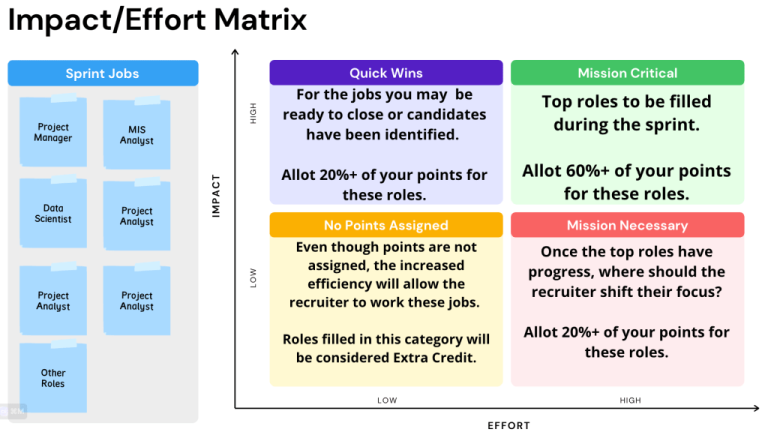
A critical tool in this process is the Role Prioritization Matrix. This matrix helps classify roles into various quadrants based on two key dimensions: the business impact of the role (y-axis) and the recruiter effort required (x-axis). This categorization guides recruiters in effectively allocating resources and attention, ensuring that recruitment efforts are strategically focused on roles that have the most significant impact on the organization.
Implementing Prioritization in Recruitment Processes
The implementation of prioritization strategies in recruiting emphasizes collaboration, accountability, and adaptability. It enables recruiters to assess their progress continually, identify focus areas, and adapt strategies to meet evolving organizational needs. This dynamic approach ensures that recruitment efforts are not only focused but also responsive to the changing landscape of talent acquisition.
The Impact of Prioritization on Recruitment Outcomes
By embracing prioritization in recruiting, organizations can transform their recruitment processes into more structured, efficient, and responsive operations. This approach aligns recruitment efforts with organizational goals and priorities, ensuring that resources are optimally utilized and that recruitment outcomes support the strategic objectives of the organization.
Best Practices for Effective Prioritization in Recruiting
- Continuous Learning and Adaptation: Agile Recruiting is an iterative process. Organizations should continually learn from each recruitment cycle, adapting and refining their prioritization strategies based on real-world feedback and outcomes.
- Collaborative Decision-Making: Involving various stakeholders, including hiring managers and department leaders, in the prioritization process ensures a more comprehensive and aligned approach to recruitment.
- Data-Driven Strategies: Leveraging data and analytics is crucial in making informed decisions about role prioritization. This includes analyzing market trends, candidate availability, and the internal impact of different roles.
- Transparent Communication: Maintaining clear and consistent communication with all parties involved in the recruitment process is vital. This transparency helps manage expectations and fosters a collaborative environment.
- Flexibility and Responsiveness: Being flexible and responsive to changing circumstances, such as shifts in market conditions or internal company dynamics, is essential for maintaining the relevance and effectiveness of recruitment strategies.
Conclusion: Prioritization as a Key to Recruitment Success
In conclusion, prioritization in recruiting, especially through Agile methodologies, is not just a tactic; it’s a fundamental shift in how organizations approach talent acquisition. It offers a structured, efficient, and responsive framework for recruitment, ensuring that organizations can adeptly navigate the complexities of talent acquisition and secure the best candidates in a competitive market. By mastering prioritization in recruiting, companies position themselves to effectively meet their current and future talent needs, driving overall organizational success.
Speed is either your strength or your weakness in recruiting. Read more here.