The rapid pace of talent acquisition today calls for a modernized approach that prioritizes efficiency. Traditional recruiting methods frequently fail to meet current demands. Implementing a point-based system can transform your hiring process to be more seamless, clear, and productive. This guide examines how a point-based model can bring unmatched efficiency to your recruiting through streamlined processes.
A point system establishes objective criteria for evaluating candidates, standardizing and accelerating decisions. By scoring applicants based on defined rubrics, you facilitate fair comparisons. Automated tracking of points then allows for simpler progress monitoring and candidate advancement. With a data-backed methodology, your recruiting team can work swiftly and consistently, accessing a unified system for clear communication and alignment.
In a field where time is of the essence, a point-based framework maximizes speed while still ensuring quality. Join the high-performing recruiters using point systems to accomplish more.
How a point system increases recruiting efficiency
In the initial stages of Sprint Recruiting, we experimented with various methods of prioritization such as Red, Yellow, Green and 1st, 2nd, 3rd rankings. This helped us pinpoint the most crucial roles to focus on during the sprint. My understanding of the system was significantly enhanced after reading Jeff Sutherland’s SCRUM method, particularly the chapter on the point system. This approach revolutionized our recruiting efficiency by allowing us to allocate points to roles, thereby offering a measurable way to track our sprint performance.
One of the most frequent inquiries I receive after people read the book is about this point system. So, I thought it would be beneficial to address the two most common questions in this article.
Read more about using points by reading these previous blog posts.
How Many Points to Allocate?
The number of points you allocate is entirely your choice. For smaller departments, you might start with a 100-point budget. Sprint Recruiting encourages you to test and adjust, so if 100 points aren’t sufficient, you can modify it in the next sprint and evaluate the impact on productivity. In larger organizations, I usually allocate a 500-point budget to department heads, who then distribute these points among their teams. This flexible approach allows for better focus and efficiency in filling roles.
How to Prioritize Roles?
When introducing Sprint Recruiting to a new division or client, I recommend that hiring managers participate in the training. This helps them understand how to prioritize roles based on a matrix.
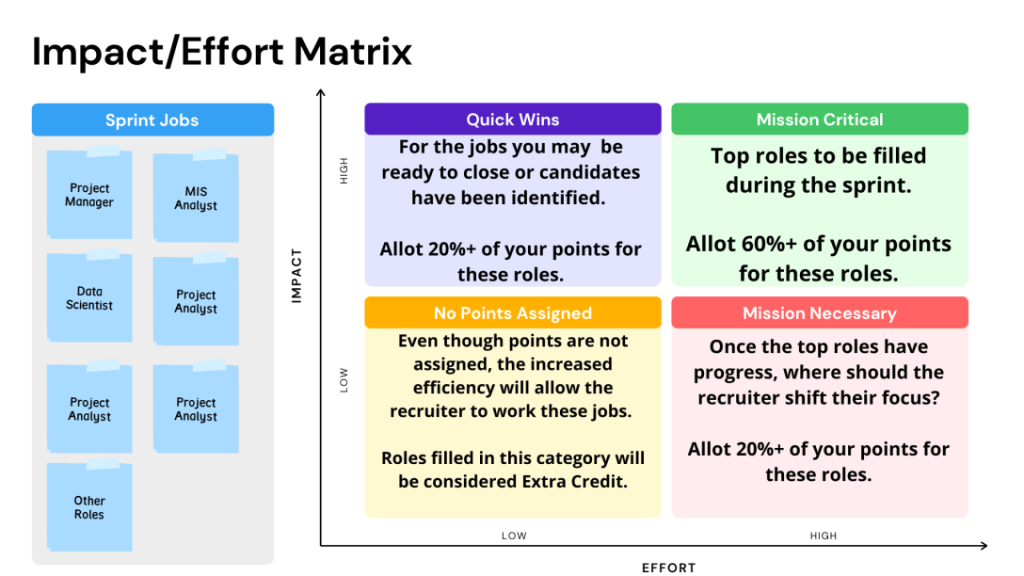
The y-axis represents the business impact, while the x-axis signifies the recruiter’s effort. This matrix helps in allocating points to ‘Mission Critical’ roles that require high effort and have a high impact, thereby enhancing recruiting efficiency.
The goal is to increase recruiting efficiency by forcing the hiring leaders to prioritize the roles. Walking them through this matrix helps them understand how to allocate their points. Remember, as a leader leader, your recruiting efficiency is limited by the reserved amount of focus on your team, limited resources, and time. This matrix helps remind your hiring leaders of these limitations and the prioritization will help your team increase client satisfaction and productivity.
Added bonus, check out the Elite Recruiter Podcast episode of me explaining this in more detail. Apple Podcast: https://lnkd.in/g2qsYjk Spotify: https://lnkd.in/g4raZei