TL;DR: Is traditional recruiting actually broken, or are recruiters just busy?
Short answer: Traditional recruiting is broken in a specific way. The work has no priority order, no cadence, and no scheduled moment to stop and look at the data, so recruiters run the same loop of intake, search, interview, place, backfill without ever fixing the loop itself.
Key numbers every talent leader should know:
- 69% of U.S. employers say they can't find the talent they need in 2026, according to the ManpowerGroup 2026 U.S. Talent Shortage Survey, and the global figure sits at 72%.
- $5,475 is the average cost per hire for a non-executive role and $35,879 for an executive role, per SHRM's 2025 benchmarking reports.
- 15% of new hires are already gone three months in, based on Korn Ferry's analysis of the 90-day breakup.
The leadership takeaway: When a large share of your requisition load is rework and every restarted search carries five figures of cost, the fastest return available to a CHRO over the next 12 months comes from installing a hiring operating rhythm that forces prioritization, caps work in progress, and puts feedback on the calendar.
I've run recruiting teams inside medium and large companies for more than twenty years, and here's the pattern I keep seeing. A recruiter opens the requisition, sources, screens, submits, places the candidate, and eight months later that same requisition reappears with a new name on it. Nobody stops to ask why, because everyone is too busy. That's the problem.
The landmines are familiar to anyone who has carried a desk. Hiring managers whose expectations were never set. Job descriptions written for a candidate who doesn't exist at the budget offered. Approval chains built in 2009 and never revisited. Recruiters absorb all of it, apologize for it, and get measured on time to fill.
Sprint Recruiting is the answer I built for that. It borrows the Agile methodology from software teams and applies it to hiring, so the business sets the priority, the team works in time boxes, and there's a standing appointment to look at what the numbers say. Recruiters stop guessing which fire to fight. Leaders stop hearing "we're working on all of them."
Why does traditional recruiting keep producing the same result?
Traditional recruiting repeats itself because three failures compound, and none of them are the recruiter's talent problem.
Unmanaged expectations
Hiring managers can be unrealistic, and in a lot of cases recruiters caused it. In our rush to please and dazzle, we skip the uncomfortable conversation at intake. Nobody defines who reviews resumes, how fast feedback is due, or what the market actually pays. So the manager dreams up the purple squirrel with fourteen skills, nine years of experience, and a salary band that would barely land a recent grad. Most of us then flip into "I'm going to rock your world" mode and chase a candidate who doesn't exist.
Meanwhile the manager waits like a disgruntled retiree in the DMV line, and both sides get frustrated over a standard the recruiter never negotiated.
The talent shortage is real
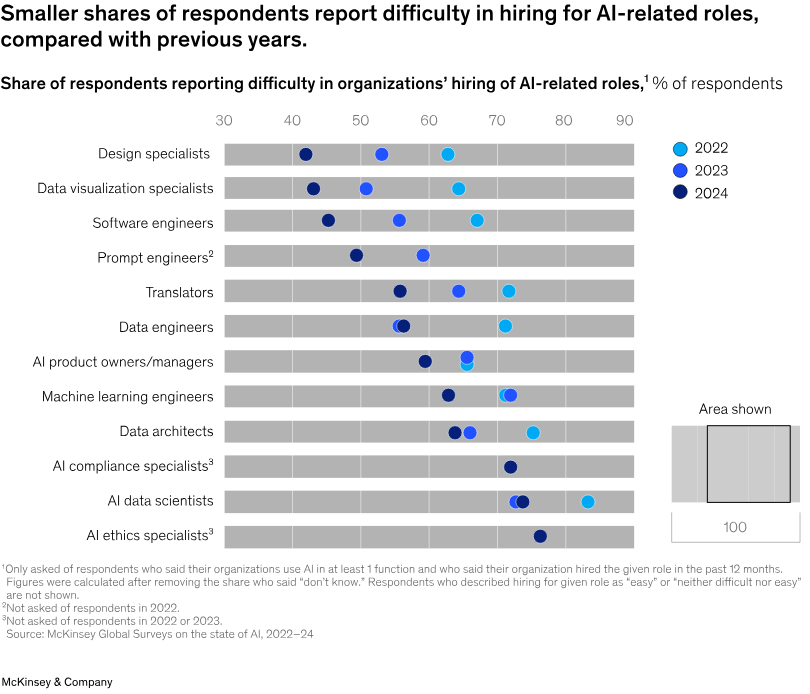
The in-demand roles are hard because ten firms are working the same fifty profiles. That pressure is measurable. ManpowerGroup's 2026 global data shows AI capability has overtaken engineering and traditional IT as the hardest skill set to find across 39,000 employers in 41 countries. Add skills gaps, location constraints, and a candidate population that reads your Glassdoor page before your careers page.
The hiring model is shifting with it. NACE's Job Outlook 2026 survey found 70% of employers now use skills-based hiring, up from 65% a year earlier. My teams moved toward competency and acumen over years-in-seat a while back, and that shift alone makes a resume-keyword workflow feel prehistoric.
The process nobody will name
I've worked in several corporations and one thing held true in all of them: there's no such thing as an easy hiring process. Regulation, inherited protocol, and untrained interviewers create real drag. Those obstacles get discussed in hallways and never in the operating review, because naming them means telling somebody their step adds nine days and no value.
What is Sprint Recruiting, and what are its four principles?
Sprint Recruiting is a hiring method that runs talent acquisition in short, time-boxed cycles borrowed from Scrum, with the business setting priority and the team reviewing performance data at the end of every cycle. I developed it while leading recruiting teams and wrote it up in the Sprint Recruiting book. It rests on four principles.
- The business defines the priority. Requisitions get ranked by business impact before work starts, so "everything is urgent" stops being an acceptable answer from anyone, including the CFO.
- Work in progress limits create focus. A recruiter carrying 40 open roles is really working eight and neglecting 32. Capping active requisitions per sprint sets a real drumbeat, which is why WIP limits in recruiting tend to be the principle leaders fight hardest and thank me for later.
- The sprint creates speed. A two-week or three-week box forces decisions inside the window instead of letting a search drift for a quarter.
- The feedback loop drives progress and creates mutual accountability. The retro is where the recruiter and the hiring manager both answer for what they owed each other.
In a boardroom, I'd say it this way: we're taking a function that runs on heroics and giving it an operating cadence, the same way finance runs a close calendar.
Those four principles answer the four dysfunctions I see in almost every recruiting organization. Everything is a priority. There's no drumbeat. There's no time to stop and evaluate. Nobody gives real feedback in either direction.
How should talent leaders roll out Sprint Recruiting?
Talent leaders should roll out Sprint Recruiting by starting with one pod, one sprint length, and one ranked requisition list, then holding the retro no matter how busy the week gets.
- Rank the reqs with the business. Sit with the operating leader and force a stack rank of open roles by revenue or risk impact. If they refuse to rank, that's your finding for the next review.
- Set the WIP limit. Cap active requisitions per recruiter for the sprint. Start conservative, roughly eight to twelve depending on complexity, and hold the line for two full sprints before adjusting. [Unverified: exact cap varies by industry and req complexity.]
- Time box the sprint and name the exit criteria. Two weeks is the common starting point. Define what "done" means for each req in that window, whether that's slate submitted, interviews scheduled, or offer extended.
- Run the retro with data, not vibes. Pull pass-through rates, submit-to-interview ratios, and manager feedback turnaround. My guide on how to use data analytics in recruiting covers the handful of metrics worth arguing about.
- Model the accountability out loud. When a leader admits in the retro that they missed their own 48-hour feedback commitment, the team learns the standard applies upward too. That behavior does more for adoption than any deck.
Our team found the sprint cadence bought back the hours we'd been burning on reactive work and pointed them at the analytics that make recruiters consultants their clients respect. [Unverified: internal team observation, not a benchmarked study.]
What this means for you as a leader
The tension is straightforward. The market squeezes you from both sides, with 69% of employers struggling to find talent and five-figure costs attached to every restarted search, while the internal process burns capacity on work nobody ranked and nobody reviewed. More sourcing volume solves neither half.
Leaders who install a hiring cadence over the next two quarters will spend 2027 arguing about which roles matter most. The rest will spend it explaining why time to fill went up again.
If you want the structured version, the Sprint Recruiting Bootcamp walks through pitfalls, prioritization, sprint setup, and feedback culture in order. I also broke down the mechanics in Top 5 Secrets of Sprint Recruiting and talked through team-level adoption in Talent Leadership and Sprint Recruiting. Pick one pod and run one sprint. Two weeks from now you'll have data instead of opinions.
FAQ
What is Sprint Recruiting in simple terms?
Sprint Recruiting is talent acquisition run in short, time-boxed cycles with a ranked requisition list, a cap on active work, and a data review at the end of each cycle. Trent Cotton developed the method and published it as Sprint Recruiting: Innovate, Iterate, Accelerate.
What are the four principles of Sprint Recruiting?
The business defines the priority, work in progress limits create focus, the sprint creates speed, and the feedback loop drives progress with mutual accountability. All four have to run together, because a sprint without WIP limits just compresses chaos.
Why does traditional recruiting fail so often?
Priority is undefined, capacity is unlimited, and nobody schedules a moment to inspect results. In a market where 69% of U.S. employers report difficulty finding talent, that produces rework at $5,475 or more per non-executive hire.
How long should a recruiting sprint be?
Two weeks works for most teams. Three weeks suits technical or executive searches where scheduling alone eats a week. Consistency matters more than the exact length, because the retro has to happen.
Does Sprint Recruiting only work for large companies?
No. Smaller teams often adopt it faster because there are fewer approval layers to renegotiate. The mechanics hold at 3 recruiters or 300, though larger organizations usually need a pilot pod first.
What should a CHRO do first?
Ask your recruiters how many requisitions they're actively working this week, then ask the business to rank those requisitions. The gap between those two answers is your business case for a sprint cadence.